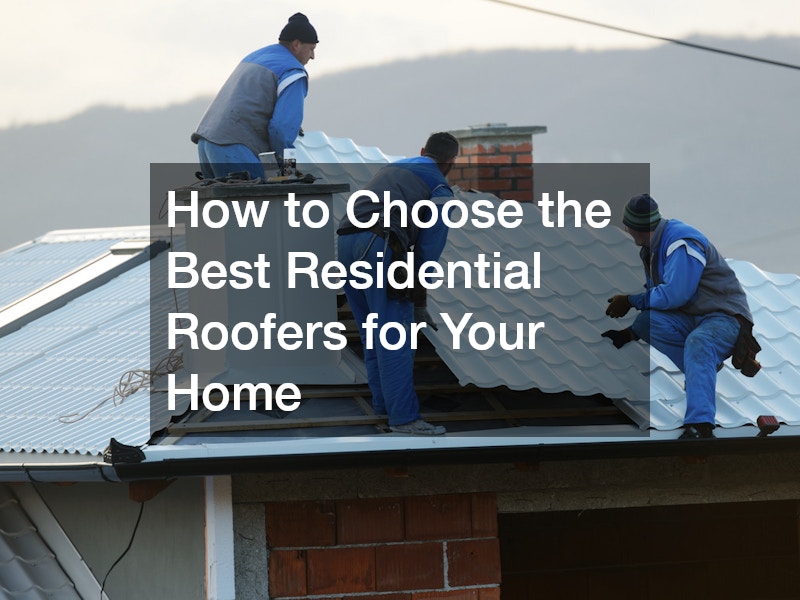
How to Choose the Best Residential Roofers for Your Home
Your home is almost certainly your most significant financial investment, and the roof is its first line of defense against the elements. A failing roof can cause catastrophic damage, leading to toxic mold growth, ruined drywall, and compromised structural integrity. When a roof begins to show signs of age or suffers storm damage, the pressure to act quickly can feel overwhelming. Unfortunately, the home improvement market is flooded with options, ranging from fly-by-night operations that disappear after a storm to high-pressure sales teams that care more about commissions than craftsmanship.
Navigating this landscape requires a strategic approach. Homeowners often find themselves caught between wanting a fair price and needing high-quality work that will last for decades. This guide provides a comprehensive, step-by-step framework to help you look past slick marketing, ask the right questions, verify legal protections, and confidently select a team that will protect your property for the long haul.
1. Assess the True Scope of Your Property Damage
Before you start contacting professional teams, you need to understand exactly what your home requires. Walk around your property with a pair of binoculars and look for obvious signs of deterioration. Look for missing, cracked, or curling shingles, as well as heavy granule loss in your gutters. Inside your home, check your upper-level ceilings for water stains, peeling paint, or dark spots that indicate active moisture penetration. Understanding these baseline issues prevents dishonest actors from inflating the scope of the project.
It is equally important to understand the scale of intervention required. A minor leak over a garage might only necessitate a targeted roof repair to replace a few compromised shingles or a cracked pipe boot. However, if your roof is over twenty years old and sagging, a complete tear-off and replacement is likely necessary. Knowing the difference keeps you from being upsold on a full replacement when a minor patch would suffice, or conversely, wasting money on temporary patches when the entire structure is failing.
When you begin researching help, focus your search exclusively on specialized residential roofers rather than general handymen. Roofing requires specialized safety equipment, specific knowledge of local building codes, and an understanding of attic ventilation systems. General handymen often lack the heavy-duty equipment and the manufacturer training required to handle complex slopes and flashing details, which can lead to premature failure and voided material warranties.
2. Research Local Stability and Community Presence
When searching for candidates, prioritize businesses that have deep, verifiable roots in your specific geographic area. The home improvement industry is notorious for storm chasers, which are out-of-state companies that travel into areas recently hit by severe weather, collect insurance checks, perform substandard work, and leave before the first winter arrives. Choosing established local roofers ensures that if a leak develops two years from now, you will actually be able to reach them to honor their workmanship warranty.
Verify their local presence by checking for a physical commercial office address rather than a post office box or a residential address. Call their local phone number and look up their business registration with your state’s Secretary of State or Department of Consumer Affairs. A company that has operated under the same name in your community for five or ten years is highly likely to provide stable, reliable service because its ongoing business relies entirely on local word-of-mouth reputation.
Examine online review platforms critically to understand their track record. Look across multiple platforms, including Google, Yelp, and the Better Business Bureau, to find consistent patterns. When evaluating local roofing companies, look past the overall star rating and read the actual text of the reviews. Pay attention to how companies handle complaints; a professional, polite response to a negative review often reveals a high level of customer service and accountability that is far more valuable than a curated list of perfect five-star ratings.
3. Verify Business Licensing and Active Insurance Policies
Never assume a company is legal just because they have a professional website and a wrapped truck. Every legitimate operation must carry comprehensive general liability insurance and workers’ compensation insurance. General liability insurance protects your property from accidental damage, such as a heavy bundle of shingles dropping through a skylight or a stray nail puncturing a hidden utility line. Workers’ compensation protects you from personal financial liability if a laborer is injured while working on your property.
Request physical copies of their insurance certificates and look closely at the expiration dates. Do not just take the paper at face value; call the insurance agency listed on the certificate to confirm that the policy is active, paid up, and specifically covers roofing activities. Because roofing is classified as high-risk, some dishonest contractors buy cheaper policies meant for low-risk trades like painting or carpentry, leaving you completely exposed if an accident occurs on your roof.
Ensure the roofing company holds all necessary state, county, and municipal licenses required to operate in your jurisdiction. Licensed contractors have passed competency exams, background checks, and frequently complete continuing education to stay updated on building codes. Hiring unlicensed roofing contractors is a massive gamble that can result in municipal fines, stop-work orders, and a complete refusal by your homeowner’s insurance policy to cover any future claims related to the roof.
4. Evaluate Manufacturer Designations and Certifications

The highest-quality material manufacturers, such as GAF, Owens Corning, and CertainTeed, offer specialized training and certification programs for elite contractors. These factory designations are not bought; they are earned through rigorous training, financial stability audits, and a proven track record of excellent installations. Only a small percentage of companies in any given market hold these top-tier designations, making them an excellent benchmark for quality.
When a company holds a master-level certification, they gain the exclusive ability to offer extended warranties that cover both materials and labor for up to fifty years. These warranties are backed directly by the multi-billion-dollar manufacturer, meaning that even if the contractor goes out of business a decade from now, the manufacturer will pay to fix any defects. If you hire a team without these credentials, your warranty will likely be limited to a standard material defect warranty, which does not cover the cost of labor to replace bad shingles.
Ask every candidate to explain their specific certification level and what extended warranties they can unlock for your home. A professional roofing expert will be proud to showcase their credentials and explain how factory-certified installation methods prevent common failures like blow-offs during high winds. This step immediately separates elite, career-minded roofers from uncertified operations that are simply looking for a quick paycheck.
5. Demand a Thorough On-Site Inspection
A reliable estimate cannot be generated from a driveway glance or an aerial satellite photograph alone. A true professional will insist on a comprehensive physical inspection of your entire roofing system. They will climb a ladder to inspect the shingles up close, check the condition of the flashing around chimneys and valleys, and physically test the wooden decking underneath for signs of soft spots or wood rot.
The inspection must also extend into your attic space. A knowledgeable inspector will examine the underside of your roof deck for water stains, mold, and rusty nails, which indicate chronic moisture retention. They will check your attic ventilation system to ensure there is a balanced intake of cool air from the soffits and an exhaust system at the ridge. Poor attic ventilation bakes shingles from the inside out, drastically shortening their lifespan and voiding product warranties.
6. Deconstruct and Compare Written Estimates
Once the inspections are complete, request detailed, itemized written estimates from at least three different companies. A professional estimate should never be a single lump-sum number written on the back of a business card. It should be a multi-page document that breaks down every single cost associated with the project, giving you total transparency into where your money is going.
Review the document to ensure it specifies the exact brand, line, and color of the shingles to be installed. It should itemize the replacement of critical components, including the synthetic underlayment, ice and water shields for vulnerable valleys, drip edges for the eaves, and all new flashing. The estimate must also explicitly cover labor costs, building permit fees, and the cleanup and disposal of old materials, ensuring you are not hit with surprise fees at the end of the job.
7. Understand the Projected Project Timeline
Before signing any contract, you must have a clear understanding of the project timeline and how the company plans to manage logistics. Ask when they expect to begin the work and how many consecutive days the project will take, assuming normal weather conditions. A typical single-family home replacement should take between one and three days; if a company tells you it will take two weeks, they likely have a small crew or are managing too many jobs at once.
Inquire about their strategy for dealing with unexpected inclement weather. A professional team closely monitors local weather radar and will never tear off more shingles than they can dry in and make watertight before a rainstorm hits. They should have heavy-duty tarps on-site and a dedicated crew ready to deploy emergency protections if a sudden storm arises during the installation process.
8. Analyze the Scope of the Proposed Maintenance Agreement
A roof is not a set-it-and-forget-it asset; it requires ongoing care to reach its full projected lifespan. When evaluating a comprehensive roofing service, ask what kind of post-installation support and maintenance agreements are included in the package. Leading companies often include a complimentary one-year or two-year inspection to ensure the materials are settling correctly and that no shifting has occurred after a full cycle of seasonal weather changes.
A comprehensive maintenance agreement should cover routine checks that protect your investment over time. This includes clearing debris from valleys, inspecting pipe boots for UV degradation, checking chimney flashing seals, and ensuring gutters are flowing freely. Investing in a structured program ensures that minor issues are caught and corrected before they evolve into major interior leaks that require expensive emergency interventions.
Understanding the breadth of available roofing services allows you to plan for the entire lifecycle of your home. A company that offers a robust suite of solutions, including gutter installation, skylight replacement, and annual maintenance plans, is generally more invested in a long-term relationship with you as a client. This ongoing relationship ensures you always have a trusted partner to call whenever severe weather hits your neighborhood.
9. Review Payment Terms and Financing Agreements
The payment terms offered by a contractor are a direct indicator of their financial health and professional integrity. You should never hire a contractor who demands a one-hundred-percent payment upfront before any materials are delivered or work begins. This is a massive red flag indicating that the company is financially unstable, using your money to fund a previous project, or planning to abandon the job entirely.
A standard, professional payment structure typically involves a three-part split. You will pay a reasonable deposit of roughly one-third of the total cost upon signing the contract to secure your place on the schedule and cover the initial material ordering fees. The second third is typically due upon the delivery of materials to your property and the arrival of the crew, and the final balance is paid only after the project is fully completed to your complete satisfaction.
10. Insist on a Fully Executed and Binding Contract
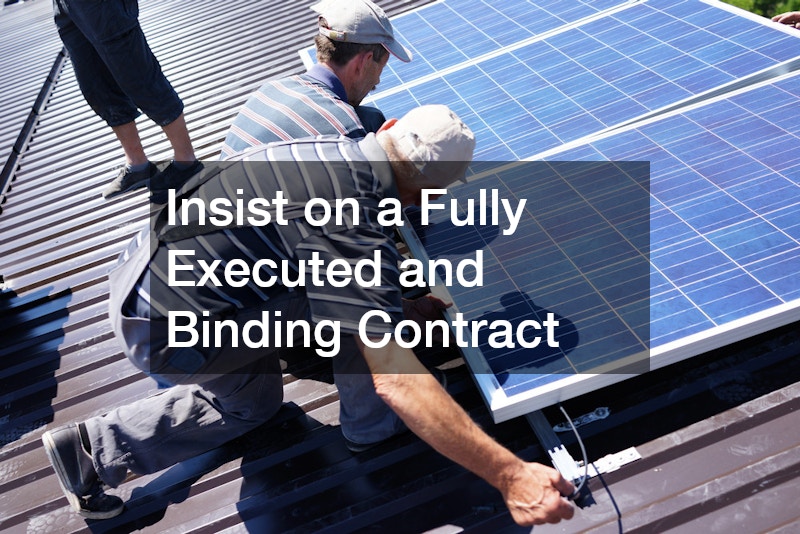
The final step in choosing your professional team is ensuring that every single verbal promise made during the sales pitch is explicitly written down in a formal, legally binding contract. If a representative promises you a free gutter cleaning, an extended warranty upgrade, or a specific shingle brand, those promises mean absolutely nothing unless they are printed directly on the contract pages signed by both parties.
The contract must clearly outline the dispute resolution process, termination clauses, and a clear change-order policy. A change-order policy dictates how unexpected issues, such as finding extensive wood rot after the old shingles are removed, will be priced and handled. This prevents the contractor from halting production and holding your roof hostage while demanding exorbitant fees to replace a few sheets of damaged plywood.
Selecting the right team to handle your home improvement needs requires a careful balance of patience, research, and attention to detail. By taking the time to verify business licenses, confirm active insurance policies, demand itemized estimates, and secure a detailed written contract, you completely eliminate the guesswork from the hiring process. Remember that the lowest price is rarely the best deal; true value lies in hiring a company that prioritizes quality materials, safe working conditions, and honest communication. With a systematic approach, you will find a professional partner who will install a beautiful, durable system designed to protect your family and your financial investment for decades to come.