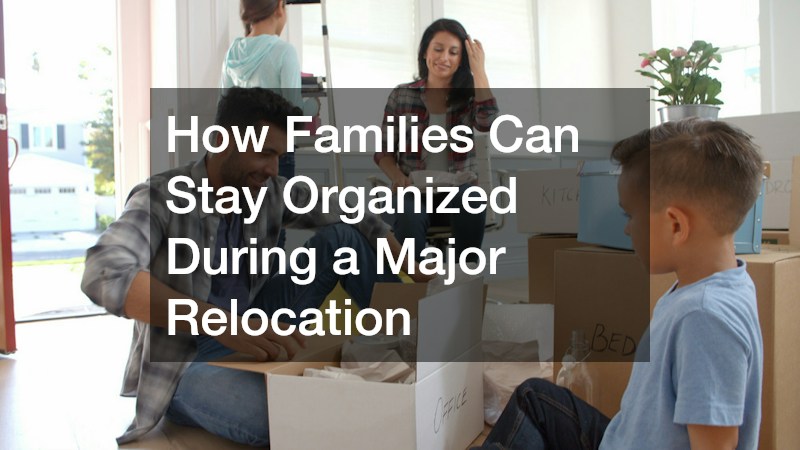
How Families Can Stay Organized During a Major Relocation
Moving a family to a new home can feel like managing dozens of projects at once. There are boxes to pack, utilities to transfer, records to gather, schedules to update, and important decisions to make about schools, healthcare, transportation, and everyday routines. Without a plan, small tasks can easily pile up and create unnecessary stress during an already busy transition.
Organization makes the process more manageable because it gives every task a place and a deadline. Families can reduce last-minute confusion by breaking the relocation into stages, assigning responsibilities, and keeping important information together. A written checklist, digital folder, moving calendar, and clearly labeled boxes can all help family members understand what needs to happen next.
Relocation is also about more than getting belongings from one address to another. Families often need to learn a new community, establish local services, and make sure children have support during the transition. By planning for both moving day and the first few weeks after arrival, households can create a smoother path from one home to the next.
Build a Moving Timeline Early
A major move becomes easier to control when the family starts with a timeline. Instead of keeping every task in one long list, divide responsibilities by week. Early tasks might include getting estimates, reviewing lease or closing dates, and deciding what to donate or discard. Later tasks can focus on packing, confirming transportation, and preparing for moving day.
Families choosing between local moving services and a local long distance mover should make that decision early because availability can affect the rest of the schedule. Local moves may require only a short transportation window, while long-distance relocations can involve delivery ranges, overnight travel, and more detailed coordination. Knowing the moving plan helps families schedule work absences, childcare, utility changes, and travel arrangements more accurately.
A shared calendar can prevent one person from carrying the entire mental load. Add deadlines for school paperwork, medical records, address changes, packing goals, and service cancellations. Family members can also assign colors or labels to different categories so urgent items are easy to spot.
The timeline should include a small buffer before and after the move. Delays can happen, and families benefit from having a little flexibility instead of scheduling every hour too tightly.

Sort Belongings Before Packing
Packing is faster when families do not move items they no longer want or need. Start room by room and separate belongings into categories for keeping, donating, selling, recycling, or discarding. Children can participate by reviewing clothes, books, and toys, which can make the process feel more predictable and give them some control over the transition.
Once the household has reduced unnecessary belongings, residential movers can work more efficiently because there are fewer boxes and pieces of furniture to transport. A smaller load can also make unpacking easier and help families avoid filling a new home with items that do not fit the new layout.
Some belongings require extra protection. Electronics, glassware, artwork, collectibles, and fragile household items may benefit from sturdy boxes, cushioning, and foam packaging. Families should label these containers clearly and avoid stacking heavy boxes on top of fragile items.
It also helps to create an inventory of high-value or sentimental belongings. Photographing important items before the move can provide a simple record of their condition. Keep essential documents, medications, jewelry, keys, and irreplaceable keepsakes with the family rather than packing them into the main moving shipment.
Packing by category and priority keeps the process organized while reducing the amount of unnecessary material entering the new home.
Create a System for Boxes and Storage
A labeling system can save hours during unloading and unpacking. Each box should identify the destination room and provide a brief description of what is inside. Families can also number boxes and keep a master inventory so they can quickly tell whether everything arrived.
Color-coded labels can make the system even easier. One color might represent the kitchen, another the primary bedroom, and another the children’s rooms. Place matching labels on doorways in the new home so movers can see exactly where each box belongs.
Not every item needs to move directly into the new residence. Storage services can be useful when families are downsizing, renovating, moving between temporary homes, or waiting for a closing date. Seasonal decorations, extra furniture, sports equipment, and archived belongings may be easier to manage when they are temporarily stored elsewhere.
Families should keep frequently needed items separate from stored belongings. Bedding, basic cookware, school supplies, clothes, toiletries, chargers, and work equipment should remain easy to access. Creating an “open first” group of boxes helps the household function before everything has been unpacked.
A consistent box and storage system makes the new home easier to navigate from the first day and reduces the chance of essential belongings becoming buried.

Research Schools Before the Move
Families with school-age children should begin researching education options as early as possible. Enrollment requirements, district boundaries, transportation, calendars, and required records can vary, so gathering information before moving can prevent delays once the family arrives.
Parents comparing elementary schools may want to consider location, class structure, extracurricular programs, transportation options, communication practices, and available student support. School visits can also provide useful context when families are able to tour before making a decision.
Some parents may be interested in a Montessori elementary school, particularly if they prefer a learning environment that emphasizes independence, hands-on activities, and mixed-age learning. Families should review each school individually because programs, schedules, admissions requirements, and educational approaches can differ.
Request records from the current school early and keep copies accessible during the move. Report cards, individualized education plans, immunization documentation, testing information, and transfer forms should not be buried in packed boxes.
Children may also benefit from learning about the new school before arrival. Looking at photos, reading the school website, reviewing the daily schedule, and talking about transportation can make the first day feel less unfamiliar. School preparation becomes much easier when it is treated as part of the relocation plan rather than something to handle after unpacking.
Arrange Healthcare Before Arrival
Healthcare can be easy to overlook when families are focused on boxes and transportation, but having medical resources lined up can reduce stress after the move. Start by gathering medical records, prescription information, vaccination histories, and contact information for current providers.
Parents should identify nearby pediatric urgent care options before they are needed. Knowing where to go for a minor illness or injury outside regular office hours can be helpful during the first weeks in a new community, especially before the family has established a relationship with a pediatrician.
Routine care should be arranged as well. Families can research primary care providers and family dental care practices that are accepting new patients. Scheduling introductory appointments after the move can help transfer records, update histories, and establish a relationship before an urgent need arises.
Insurance details also deserve attention. A move can change provider networks, plan availability, or coverage options, particularly when relocating to a different state or employer network. Families should contact their family health insurance provider to confirm coverage dates, in-network options, and any actions required after an address change.
Keep insurance cards, medication lists, allergy information, and emergency contacts in an accessible folder. These documents should travel with the family instead of being packed with general household items.
Taking care of healthcare logistics early helps families avoid searching for essential information during stressful situations.
Prepare an Essentials Kit for Moving Day
Moving day becomes much easier when the family does not have to open multiple boxes to find basic necessities. Pack one or more essentials bags that remain with the household throughout the move. These should contain the items everyone is most likely to need during travel, arrival, and the first night.
Include medications, toiletries, chargers, changes of clothes, basic cleaning supplies, paper towels, snacks, bottled water, important documents, pet supplies, and comfort items for children. Families with babies or toddlers should also pack enough diapers, wipes, food, and familiar toys for more time than they expect the move to take.
Basic tools can be useful for assembling furniture, opening boxes, and making small adjustments. Scissors, tape, screwdrivers, trash bags, flashlights, and a first-aid kit should be kept somewhere easy to reach.
Families should also prepare a simple meal plan for the first day. Takeout may be convenient, but having breakfast items, drinks, and snacks available prevents everyone from depending on one restaurant order after a tiring move.
An essentials kit creates a small zone of predictability during a hectic day. Even if the rest of the home is filled with unopened boxes, the family can still sleep, eat, clean up, and handle basic routines comfortably.
Assign Responsibilities to Family Members
Organization works best when responsibilities are shared. One adult may handle moving company communication while another manages utilities, school records, or healthcare transfers. Older children can pack personal items, label boxes, and keep track of belongings they want available immediately after the move.
Responsibilities should be specific rather than vague. Telling someone to “help with packing” can lead to confusion, while assigning a clear task such as packing books, labeling kitchen boxes, or checking bedroom closets gives the person a defined goal.
A central checklist can show what has been completed and what still needs attention. Families can use a notebook, whiteboard, shared spreadsheet, or moving app depending on what is easiest for everyone to access. The method matters less than consistency.
Children should be included at an age-appropriate level. Younger children might choose which toys go into their first-night bag, while teenagers can help research the new community, organize their rooms, or manage personal electronics.
Families should also decide who will supervise pets and young children on moving day. Keeping them away from heavy furniture, open doors, and busy walkways can make the environment safer and allow movers to work with fewer interruptions.
Shared responsibilities reduce stress and help each family member feel involved in the transition.

Establish Routines Soon After Arrival
Unpacking every box immediately is rarely necessary. Families should first focus on the rooms and routines that make daily life possible. Set up beds, bathrooms, basic kitchen supplies, work areas, and children’s essentials before tackling decorations or less frequently used belongings.
Maintaining familiar routines can help children adjust. Regular mealtimes, bedtime routines, school preparation, and family activities provide structure when the surroundings are new. Even small habits, such as eating breakfast together or taking an evening walk, can make the new house begin to feel familiar.
Use the first few weeks to learn the community. Locate grocery stores, pharmacies, parks, schools, medical facilities, libraries, and other services the family is likely to use. Introductions to neighbors can also help families learn practical information about the area.
Continue using the relocation checklist after moving day. There may still be address updates, registrations, appointments, account changes, and unpacking tasks to complete. Crossing off these items gradually prevents them from being forgotten once normal routines resume.
It can also help to unpack according to function rather than trying to finish one room at a time. For example, setting up school supplies, work equipment, laundry essentials, and everyday kitchen items may be more useful than immediately arranging decorative pieces. Families can keep a temporary donation box nearby for items that no longer make sense in the new space. As routines develop, they can adjust storage systems, furniture placement, and household responsibilities based on what is actually working. This gradual approach prevents the pressure to make every decision during the first few days. It also gives everyone time to become familiar with the new home before committing to permanent organizational choices that may need to change later for everyone.
A major relocation involves much more than transporting possessions. Families who organize the move around timelines, belongings, education, healthcare, and everyday routines can reduce confusion at each stage. With a clear system and shared responsibilities, the transition becomes easier to manage, allowing the household to spend less time searching for information and more time settling into the new community.